Tier Tool
1 / 5
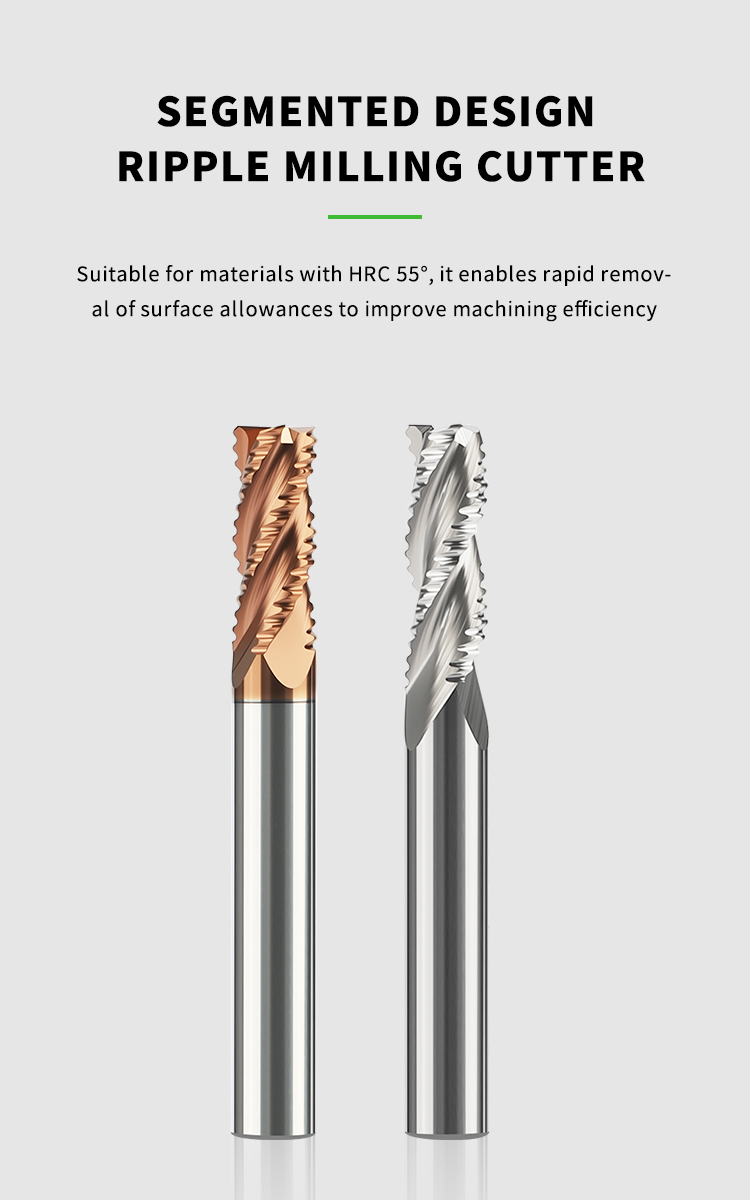


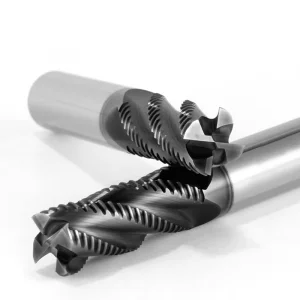
| Product Type | Ripple end mill |
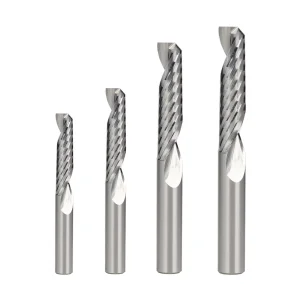
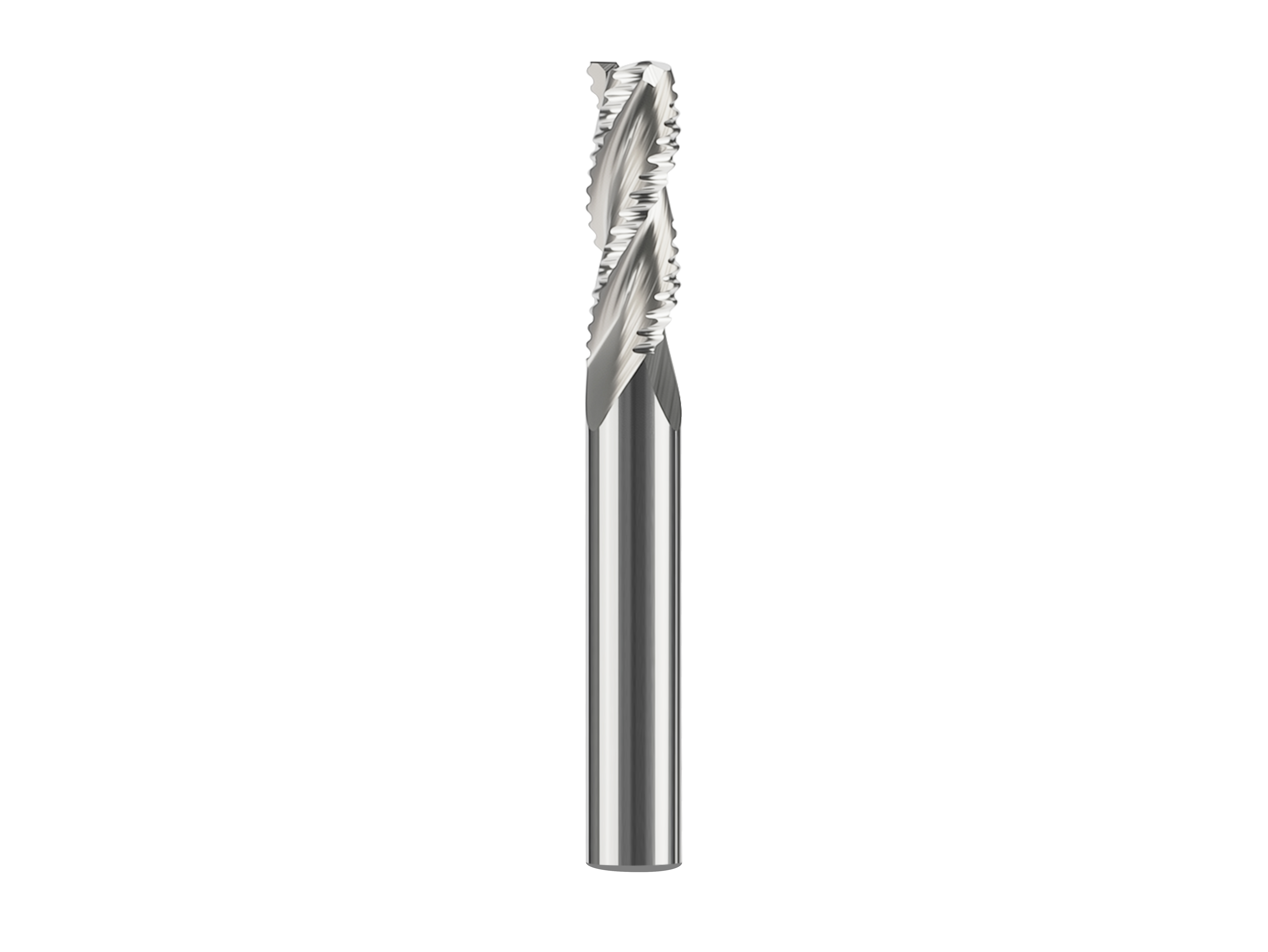
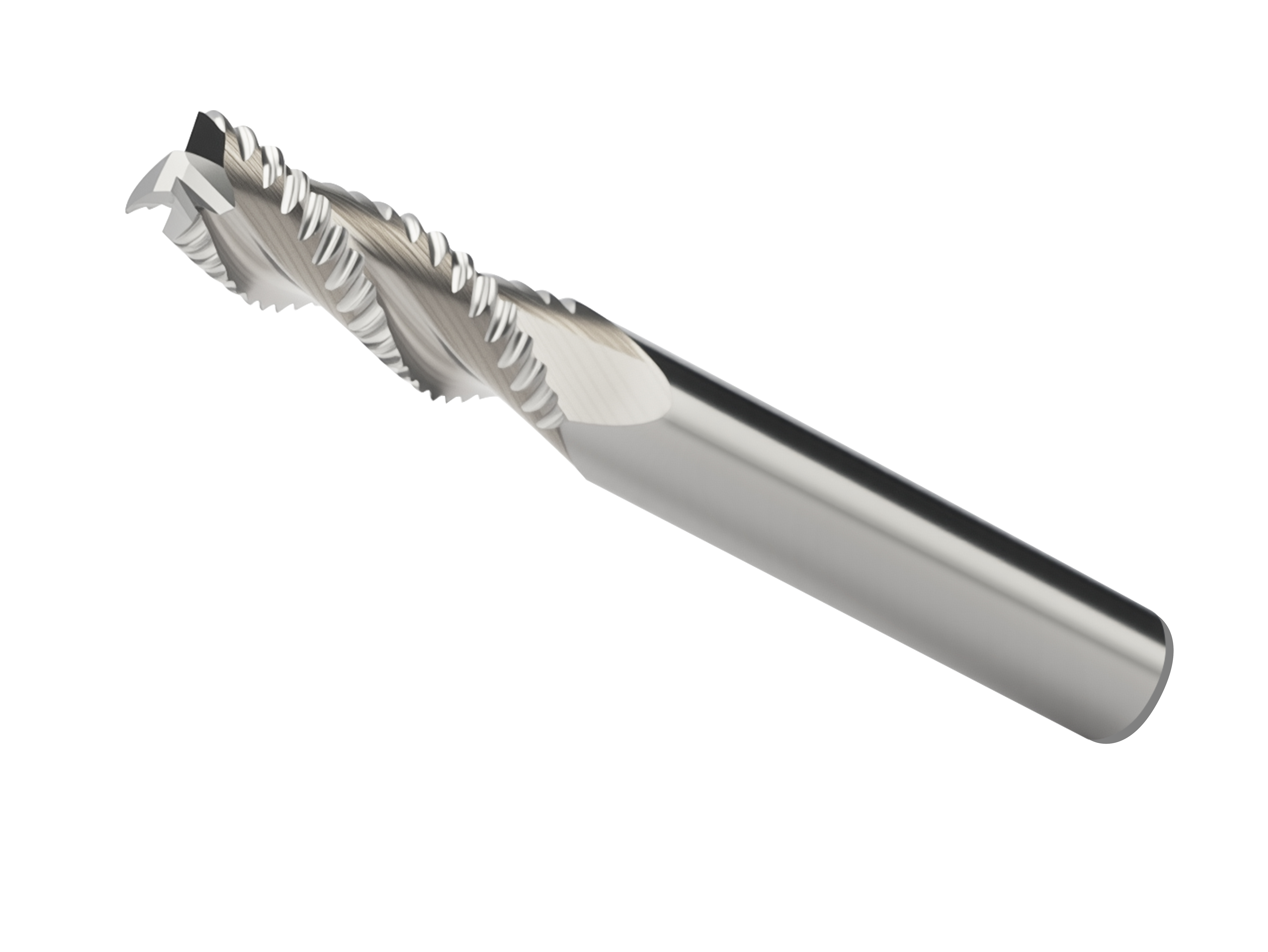
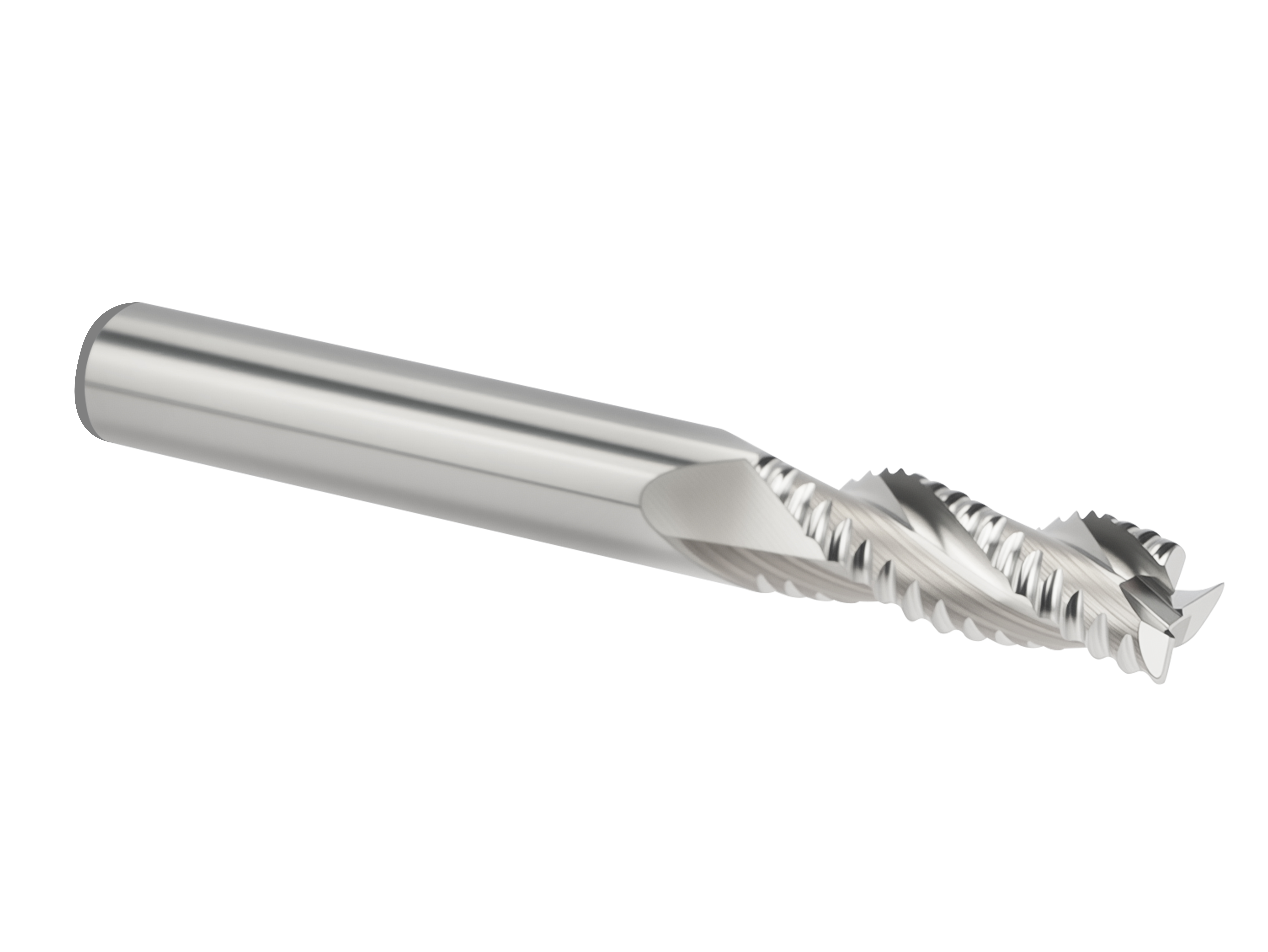
| Feature | The rippled cutting edge has multiple contact points. |
| Application | Rough machining |
| Advantage | High-efficiency rough machining |
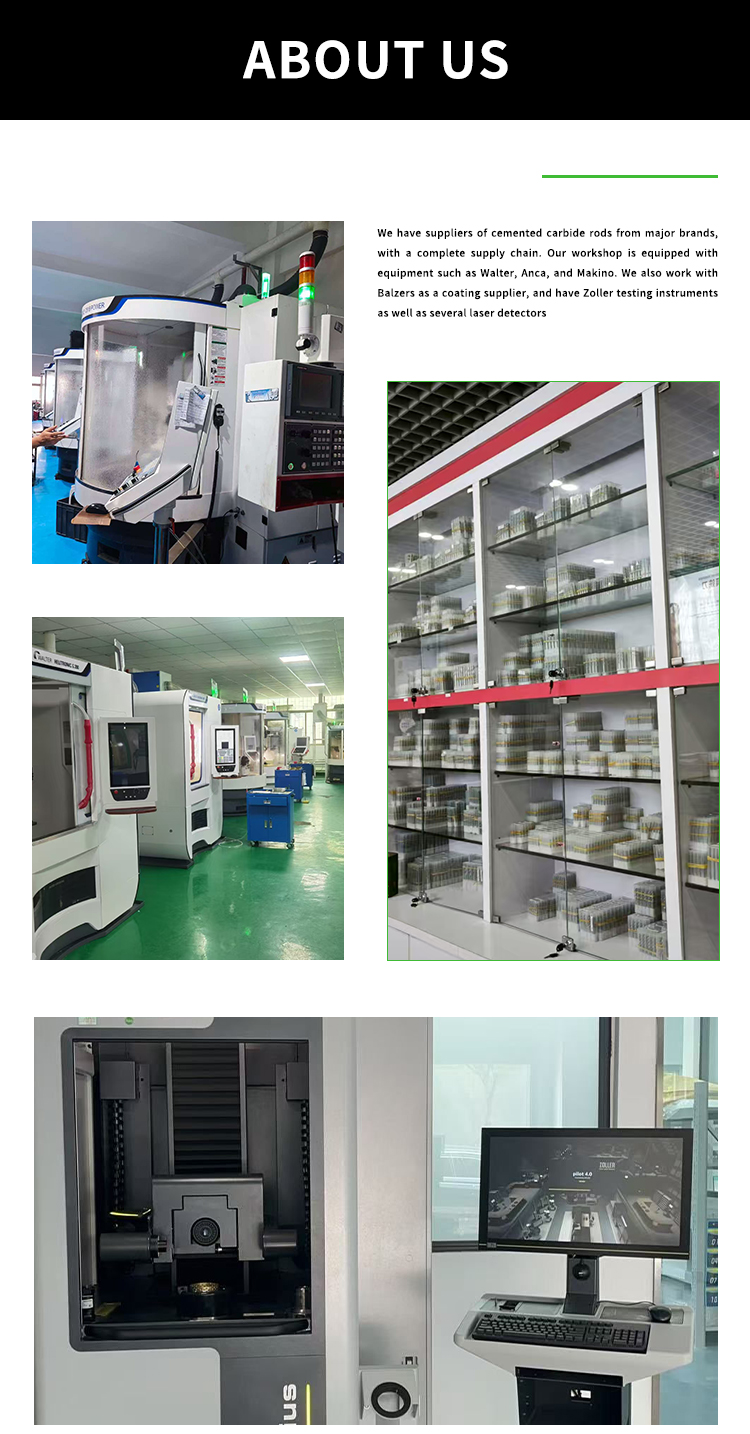
| Applied machine tool | Machining center CNC |
| Origin | China |
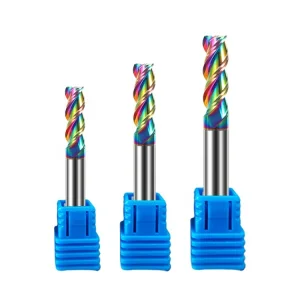
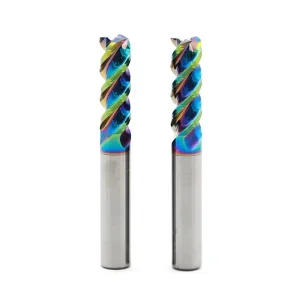
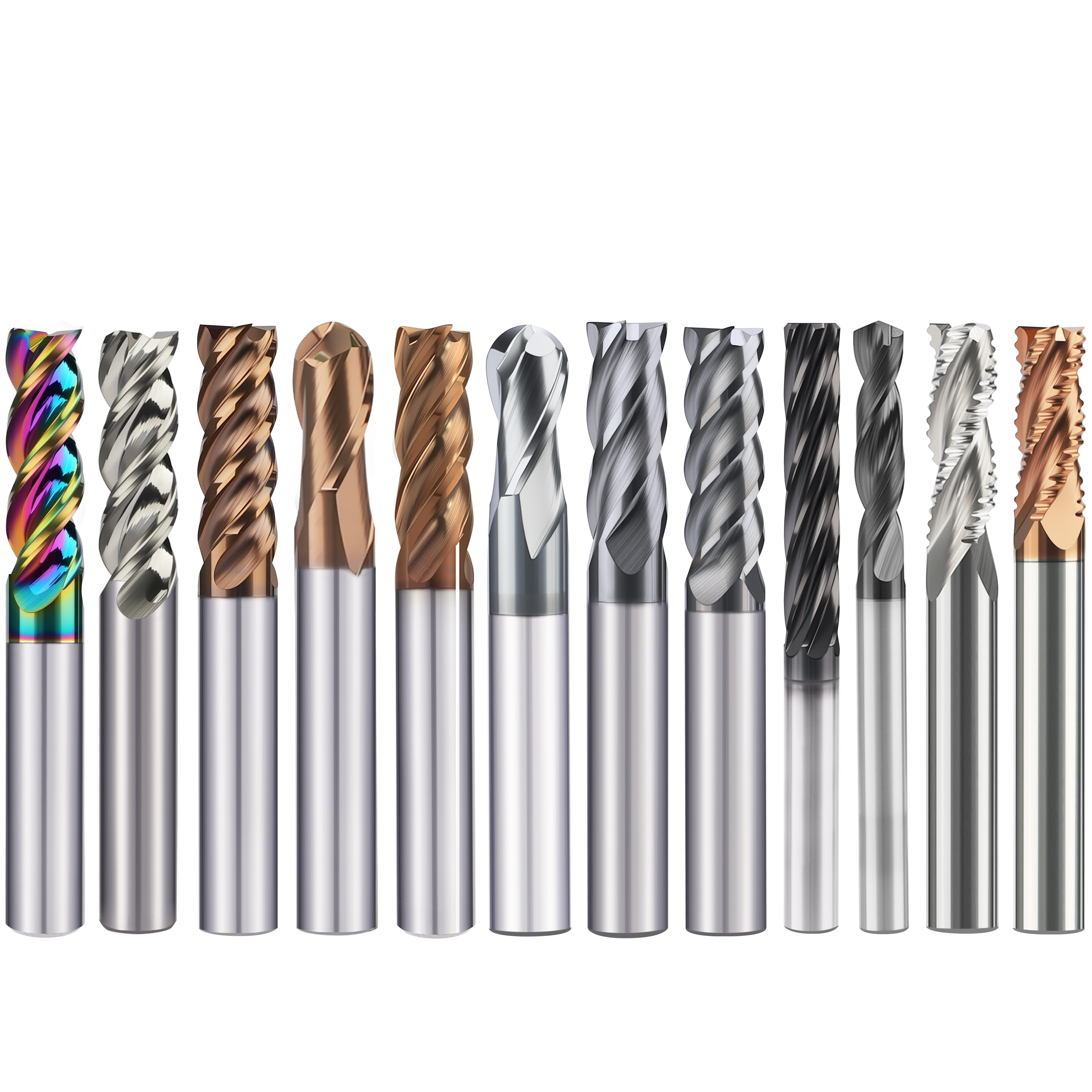
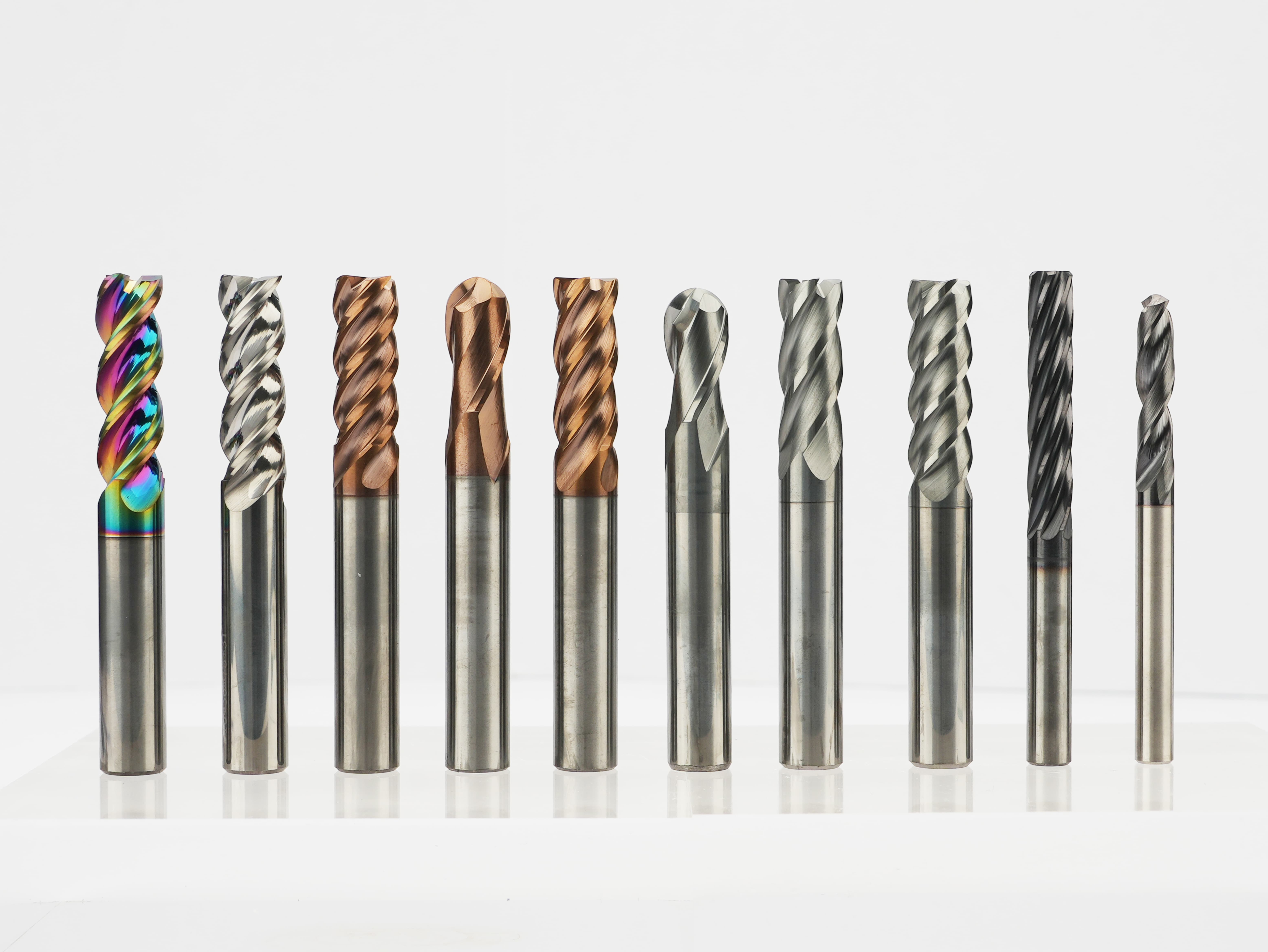
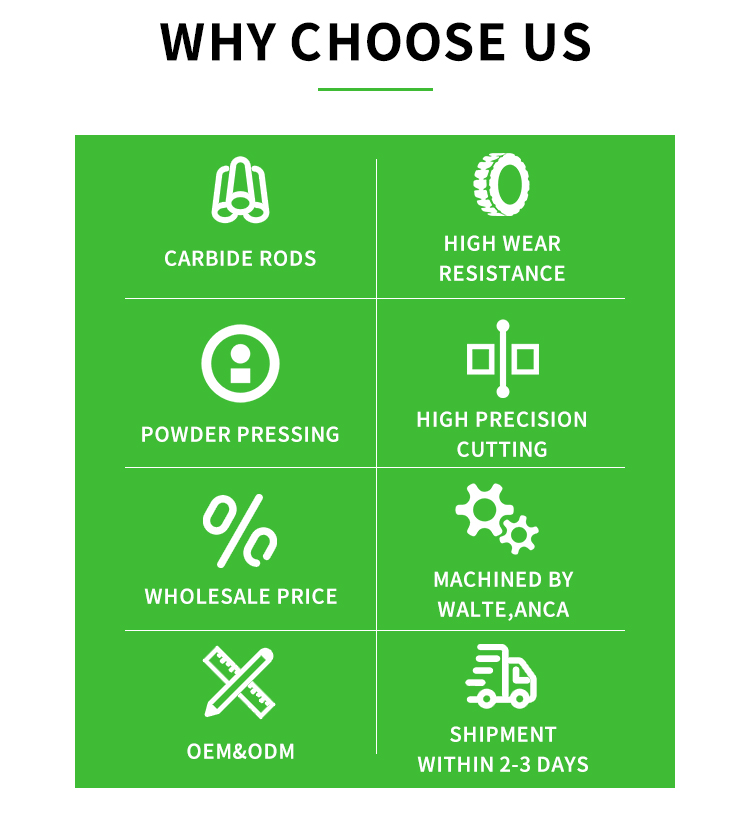
| Coating | TiSin/Uncoated |
| HRC | 45°/55°/60°/65° |
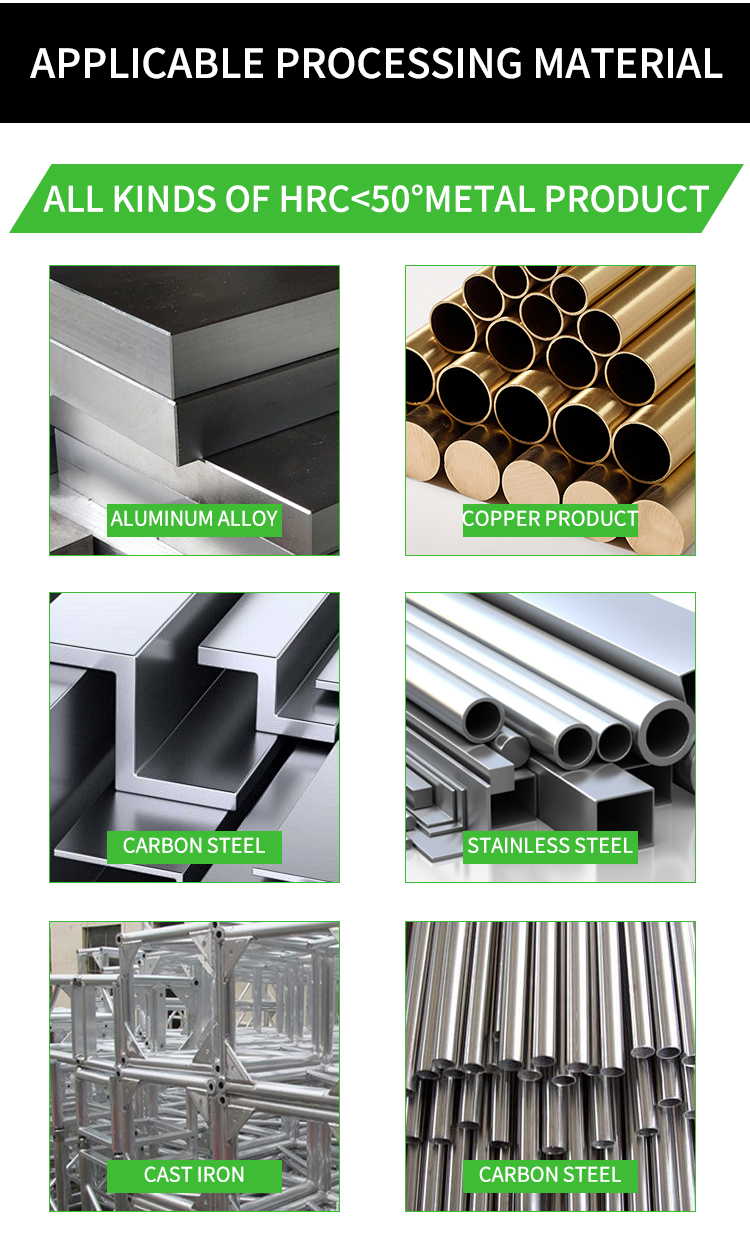
| Applicable machining material | Die steel, carbon steel, aluminium alloy, copper alloy |
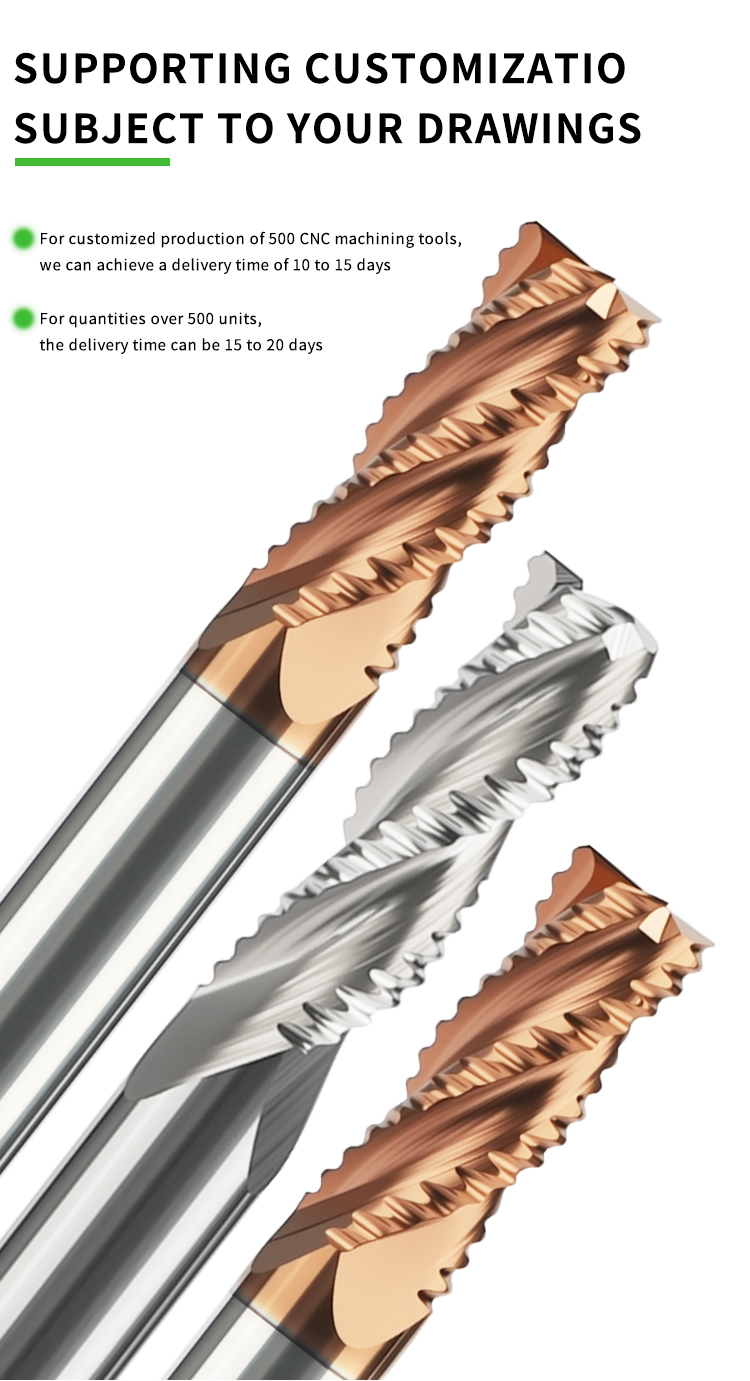
| OEM & ODM & OBM | Warmly accepted |
| Shipping | DHL, FEDEX, UPS etc |
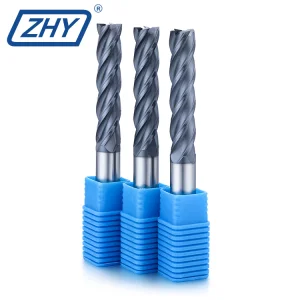
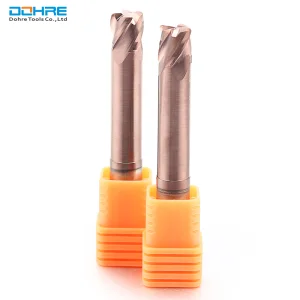
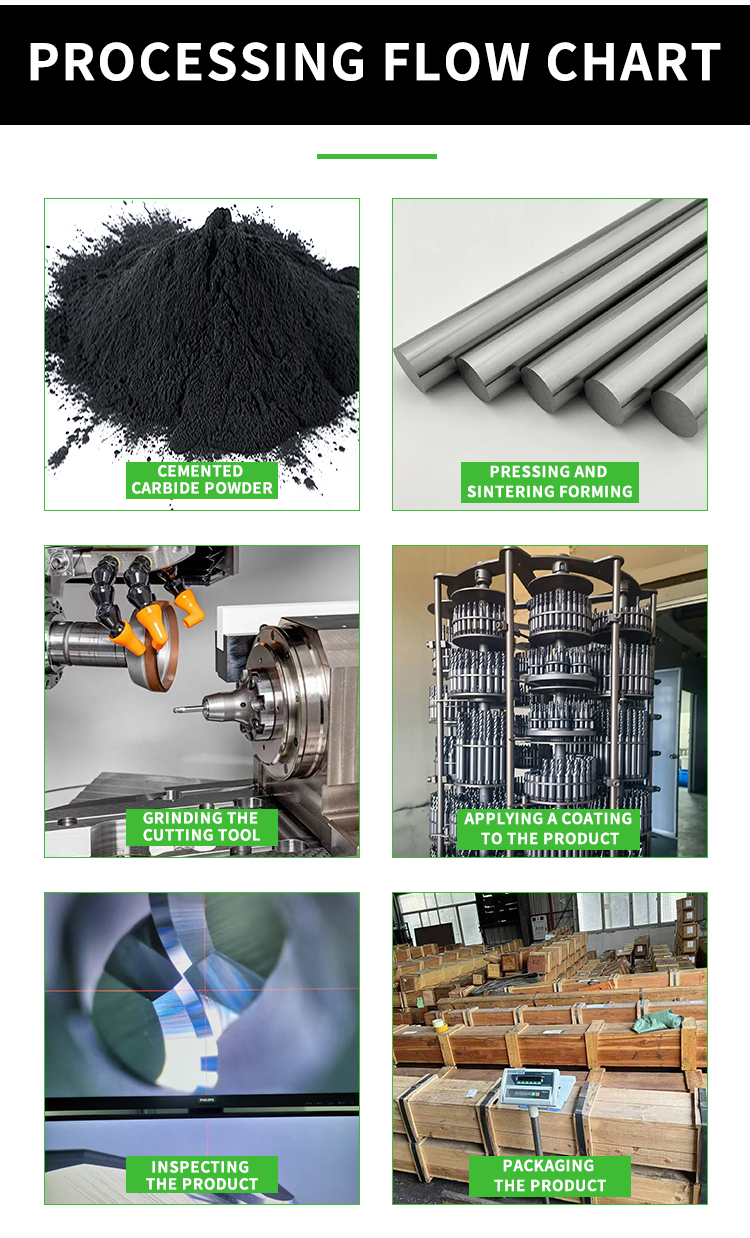
Roughing end mills typically feature wider, deeper cutting edges and special tooth profile designs. The cutting edges are relatively robust, capable of withstanding large cutting forces. They can adopt larger cutting depths and feeds, enabling rapid stripping of excess material, achieving high cutting volumes, and improving processing efficiency.
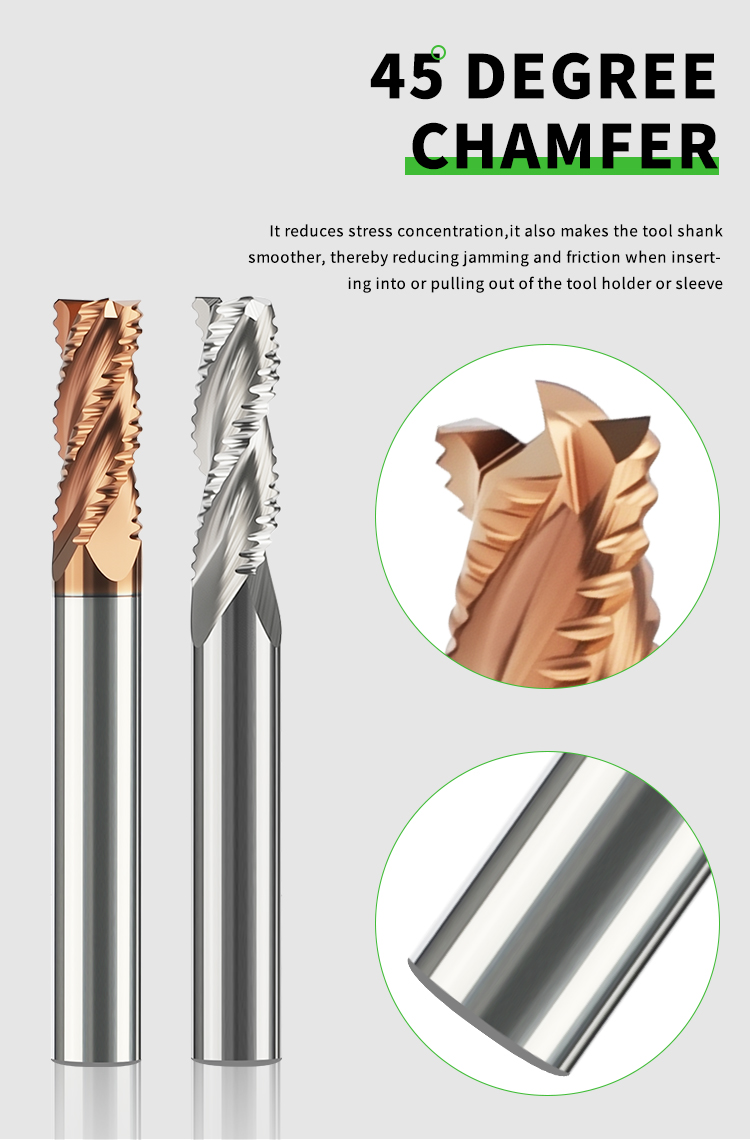
Their serrated or wavy cutting edges reduce the contact area between the tool and the workpiece, thereby lowering cutting resistance, avoiding vibration and heat generation, making the cutting process more stable, and helping to protect both the tool and the workpiece.
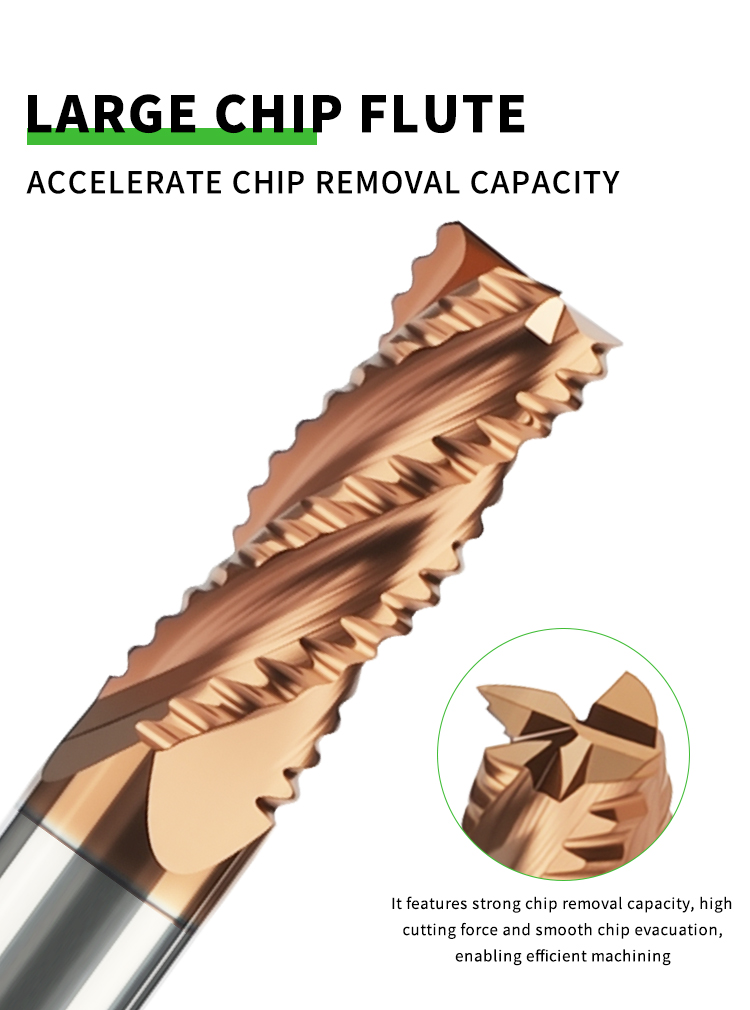
The deep groove design and special edge shape make it easier for chips to be discharged, preventing the formation of built-up edges, avoiding damage to the tool or workpiece caused by chip blockage, and ensuring the smooth progress of processing.
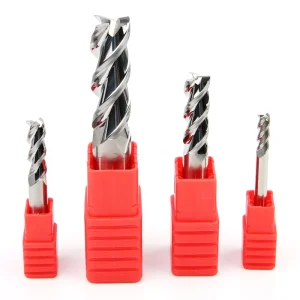
Some roughing end mills adopt multi-edge cutting methods or specific edge patterns, such as three-edge multi-tooth spiral designs, which have excellent chip splitting and breaking capabilities, allowing chips to break and be discharged in a timely manner, further improving chip evacuation efficiency.
Due to the distributed cutting force and smooth chip evacuation, the stress on the tool during cutting is more uniform, which is less prone to local excessive wear, thereby extending the service life of the tool.
Some roughing end mills are made of high-performance tool materials such as tungsten steel and undergo coating treatments, such as TiCN coating, TiN coating, and TiAlN nano super-hard coating. These enhance the tool's hardness and wear resistance, enabling it to maintain good cutting performance when processing hard materials and reducing the frequency of tool wear and replacement.
They can be used for processing various materials such as stainless steel, aluminum alloys, die steel, tool steel, carbon steel, alloy steel, cast iron, and general iron materials. For materials with different hardness and properties, efficient processing can be achieved by selecting appropriate tool materials, coatings, and cutting parameters.
They are mainly used in the roughing stage of workpieces, such as blank processing and large allowance cutting. They are also suitable for processing tasks with low requirements on dimensional accuracy and surface quality, and can be used in various processing forms such as side milling, slot milling, and large surface roughing.
The primary advantage is high-efficiency rough machining. Its wavy cutting edge creates multiple contact points, which reduces contact area, lowers cutting resistance, avoids vibration, and makes the cutting process more stable.
They can process a wide variety of materials including die steel, carbon steel, aluminium alloy, copper alloy, stainless steel, alloy steel, and cast iron.
They feature a deep groove design and special edge patterns, such as a three-edge multi-tooth spiral design, which break up and discharge chips quickly. This prevents chip blockage and stops built-up edges from forming.
They are designed to be applied on Machining Center CNC tools.
The distributed cutting force and smooth chip evacuation ensure uniform load distribution across the tool, reducing local wear. Additionally, high-performance base materials like tungsten steel and advanced wear-resistant coatings (TiCN, TiN, TiAlN nano super-hard coating) prevent fast degradation.